Financial District NYC Architecture Tour

Explore the architecture, history, culture and urban evolution of New York through our architect-led walking tours and experiences.

Tour Overview

The Financial District is where New York’s architectural ambition began. From early skyscrapers and monumental civic buildings to contemporary towers rising from historic streets, this neighborhood tells the story of how architecture, finance, and power shaped the modern city.

Led by an architect and urban expert, this walking tour explores the evolution of Lower Manhattan through its buildings, public spaces, and urban fabric—revealing how design decisions made over a century ago continue to influence New York today.


Choose Your Experience

Join a scheduled public tour, book a private experience, or organize a custom program for your group.

Public Tour

Small groups up to 10 guests
Duration: 2 hours
In English
Adults $59, Students $39

Private Tour

Flexible Size and Scheduling
Duration: 2 /4 /6 hours
In English, Spanish, Italian & French
Starting at $399

Group Program

Customized itineraries and themes
From 2 hours to multiple days
In English, Spanish, Italian & French
Price by request

Architectural Journey

Immerse yourself in the Financial District’s rich history and innovative spirit as you visit key landmarks and hidden gems:

Colonial Architecture (1600s–early 1800s)
  • Original Lenape tribe settlement
  • Giovanni da Verazzano (1524), Henry Hudson (1609) – Early explorers.
  • Dutch New Amsterdam (1624-64), Origins of the city.
  • New Amsterdam City Walls, (1653), Wall Street’s name origin.
  • British New York, (1664 -1776), Transformation into an English colony.
  • James Watson House, (1793–1806), Federal style townhouse.
  • Schermanhorn Row, (1810–1812), Early mercantile brick warehouses.
  • Castle Clinton, (1811), Early fort, later immigration station.
  • Fraunces Tavern (1723), A colonial-era gem steeped in Revolutionary War history.
  • Stone Street,  One of NYC’s oldest streets, now a lively historic district.
Greek Revival Architecture
  • Federal Hall, (1842), Town & Davis – Greek Revival, where Washington took oath of office.
Neo-Gothic Architecture
  • Trinity Church – A Gothic Revival masterpiece by Frederick Clarke Withers (1846).
  • Woolworth Building (Cass Gilbert, 1914)
Neo-Renaissance and Beaux Arts Architecture
  • Federal Reserve Building – Icons of America’s financial power (1924).
  • Custom House, neoclassical landmark by Cass Gilbert, 1907-12)
Art Deco Architecture
  • One Wall Street, Ralph Walker (1930), an Art Deco masterpiece
Modern Architecture
  • Chase Manhattan Plaza, modern tower by SOM, (1960)
  • Marine Midland Building (HSBC), 1967, Bunshaft (SOM) – Plaza with Noguchi’s The Cube.
Post-Modern Architecture
  • 60 Wall Street,  Kevin Roche & John Dinkeloo (1988) – Postmodern reinterpretation of classical forms.
Contemporary Architecture
  • 8 Spruce Street – Frank Gehry’s only NY tower, (2010).
  • Fulton Transit Center, Light-filled transit hub with oculus dome by Grimshaw, (2015).
  • World Trade Center Complex – A showcase of contemporary design, featuring:
  • One World Trade Center (Freedom Tower) – Designed by SOM’s David Childs (2015).
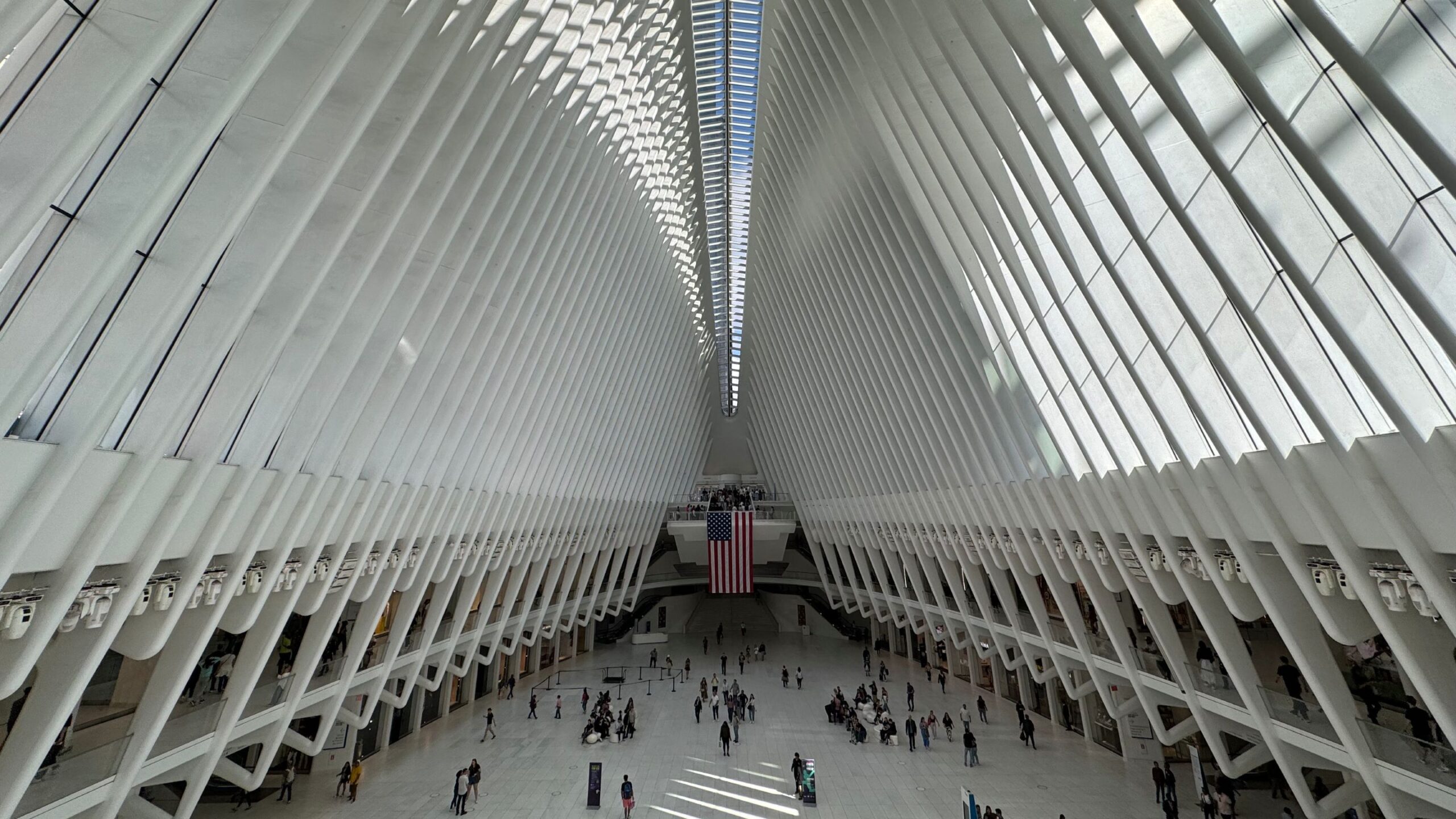
  • Oculus PATH Station – A futuristic transit hub by Santiago Calatrava (2015).
  • St. Nicholas Greek Orthodox Church – An elegant creation by Calatrava (2020).
  • Perelman Performing Arts Center – A stunning cultural space by REX (2023).
  • 9/11 Museum – Snøhetta’s museum design (2014).
Parks, Plazas, Monuments
  • Bowling Green Park – The oldest public park in NY (site of George III statue toppled in 1776).
  • Battery Park (1960s) – Waterfront Park.
  • Zuccotti Park – A hub of public life, designed by Cooper, Robertson & Partners (2006).
  • 9/11 Memorial – Reflect on history at Michael Arad’s moving memorial (2011)

Featured Buildings

  • Castle Clinton, 1811 – Early fort, later immigration station.
  • Federal Hall, 1842, Town & Davis – Greek Revival, where Washington took oath of office.
  • Trinity Church – A Gothic Revival masterpiece by Frederick Clarke Withers (1846).
  • Custom House, neoclassical landmark by Cass Gilbert, 1907-12)
  • One Wall Street, An Art Deco masterpiece by Ralph Walker (1930).
  • Chase Manhattan Building and Plaza, modern tower by SOM, (1960)
  • Oculus PATH Station – A futuristic transit hub by Santiago Calatrava (2015)
View additional buildings and sites explored on this tour

Immerse yourself in the Financial District’s rich history and innovative spirit as you visit key landmarks and hidden gems:

Colonial Architecture (1600s–early 1800s)
  • Original Lenape tribe settlement
  • Giovanni da Verazzano (1524), Henry Hudson (1609) – Early explorers.
  • Dutch New Amsterdam (1624-64), Origins of the city.
  • New Amsterdam City Walls, (1653), Wall Street’s name origin.
  • British New York, (1664 -1776), Transformation into an English colony.
  • James Watson House, (1793–1806), Federal style townhouse.
  • Schermanhorn Row, (1810–1812), Early mercantile brick warehouses.
  • Castle Clinton, (1811), Early fort, later immigration station.
  • Fraunces Tavern (1723), A colonial-era gem steeped in Revolutionary War history.
  • Stone Street,  One of NYC’s oldest streets, now a lively historic district.
Greek Revival Architecture
  • Federal Hall, (1842), Town & Davis – Greek Revival, where Washington took oath of office.
Neo-Gothic Architecture
  • Trinity Church – A Gothic Revival masterpiece by Frederick Clarke Withers (1846).
  • Woolworth Building (Cass Gilbert, 1914)
Neo-Renaissance and Beaux Arts Architecture
  • Federal Reserve Building – Icons of America’s financial power (1924).
  • Custom House, neoclassical landmark by Cass Gilbert, 1907-12)
Art Deco Architecture
  • One Wall Street, Ralph Walker (1930), an Art Deco masterpiece
Modern Architecture
  • Chase Manhattan Plaza, modern tower by SOM, (1960)
  • Marine Midland Building (HSBC), 1967, Bunshaft (SOM) – Plaza with Noguchi’s The Cube.
Post-Modern Architecture
  • 60 Wall Street,  Kevin Roche & John Dinkeloo (1988) – Postmodern reinterpretation of classical forms.
Contemporary Architecture
  • 8 Spruce Street – Frank Gehry’s only NY tower, (2010).
  • Fulton Transit Center, Light-filled transit hub with oculus dome by Grimshaw, (2015).
  • World Trade Center Complex – A showcase of contemporary design, featuring:
  • One World Trade Center (Freedom Tower) – Designed by SOM’s David Childs (2015).
  • Oculus PATH Station – A futuristic transit hub by Santiago Calatrava (2015).
  • St. Nicholas Greek Orthodox Church – An elegant creation by Calatrava (2020).
  • Perelman Performing Arts Center – A stunning cultural space by REX (2023).
  • 9/11 Museum – Snøhetta’s museum design (2014).
Parks, Plazas, Monuments
  • Bowling Green Park – The oldest public park in NY (site of George III statue toppled in 1776).
  • Battery Park (1960s) – Waterfront Park.
  • Zuccotti Park – A hub of public life, designed by Cooper, Robertson & Partners (2006).
  • 9/11 Memorial – Reflect on history at Michael Arad’s moving memorial (2011)

Tour Themes

• Origins of the Vertical City

Explore how Lower Manhattan became the testing ground for the skyscraper, where new structural systems, elevators, and zoning laws first reshaped the city vertically.

• Architecture of Capital and Power

From early banking halls to corporate towers, the tour examines how architecture has been used to project stability, authority, and economic ambition.

• Engineering Innovation and Fireproof Construction

Discover how advances in steel framing, foundations, and fireproofing enabled New York’s earliest tall buildings and set global precedents.

• Public Space, Streets, and the Financial Grid

Understand the relationship between narrow colonial streets, emerging plazas, and the dense urban fabric that defines the Financial District.

• Continuity and Transformation

Trace how historic structures coexist with modern interventions, revealing layers of architectural evolution rather than a single frozen moment in time.

Itinerary & Route

Meeting Point: Castle Clinton National Monument

The tour begins in Battery Park, where the city’s relationship to trade, infrastructure, and the harbor sets the stage for New York’s architectural rise. From there, we move along Broadway, tracing the evolution of commercial architecture and early high-rise development.

The itinerary continues through Wall Street and Pine Street, exploring the dense urban fabric of finance, early skyscrapers, and engineering innovation. Along Cedar Street, we examine how narrow streets and monumental buildings interact at the pedestrian scale.

The tour concludes at the World Trade Center, reflecting on continuity, resilience, and the transformation of Lower Manhattan’s architectural identity.

Ending Point: Oculus World Trade Centre

Your Guides

Our tours are led by architects and urban experts with deep knowledge of New York’s architecture, development, and city systems.

Each guide brings a unique perspective, combining professional experience with a passion for sharing the stories behind the city’s buildings and neighborhoods.

Tour Experience Gallery

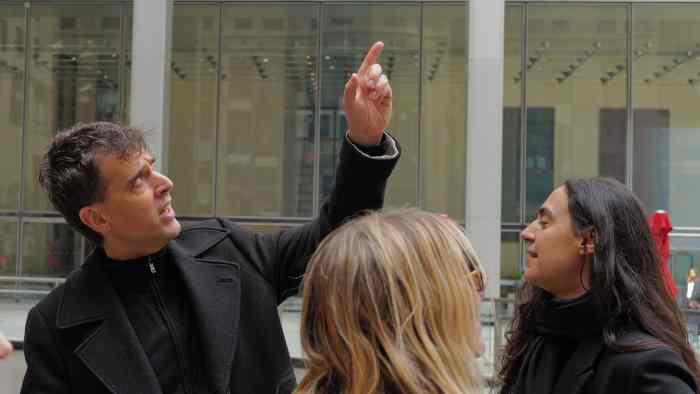
A glimpse into the architecture, streets, and spaces explored on this tour.

Your Title Goes Here

Your content goes here. Edit or remove this text inline or in the module Content settings. You can also style every aspect of this content in the module Design settings and even apply custom CSS to this text in the module Advanced settings.

Your Title Goes Here

Your content goes here. Edit or remove this text inline or in the module Content settings. You can also style every aspect of this content in the module Design settings and even apply custom CSS to this text in the module Advanced settings.

Practical Information

Accessibility:

This tour involves moderate walking at a comfortable pace with regular stops along the route. While most of the tour takes place on public sidewalks and plazas, some areas may include uneven surfaces.

Please contact us in advance if you have specific accessibility needs, and we will do our best to accommodate you

What to Bring:

We recommend wearing comfortable walking shoes and dressing appropriately for the weather. In warmer months, consider bringing water, sunscreen, and a hat. In cooler weather, please dress in layers. A curious mind is all you need to enjoy the tour.

Weather Policy:

Tours take place rain or shine. In case of severe weather conditions that may affect safety or the quality of the experience, we will contact you in advance to reschedule or provide alternative arrangements.

Cancellation Policy:

Public tours can be canceled or rescheduled up to 24 hours in advance for a full refund.

Private tours and group programs are subject to specific cancellation terms, which will be outlined at the time of booking or proposal.

Please contact us if you have any questions regarding your reservation.

Testimonials

We enjoyed the tour immensely, not only because of Ivan’s wide-ranging knowledge of the field of architecture, but because of his unique insights and personable self. He was attentive to the most peripheral of our questions, and instead of one-liners, he engaged us in a discursive manner. It was not just a conversation about architecture and the buildings that filter our world, but about the whole environment subtending it.

Richard and Joy

We enjoyed the tour immensely, not only because of Ivan’s wide-ranging knowledge of the field of architecture, but because of his unique insights and personable self. He was attentive to the most peripheral of our questions, and instead of one-liners, he engaged us in a discursive manner. It was not just a conversation about architecture and the buildings that filter our world, but about the whole environment subtending it.

Richard and Joy

Frequently Asked Questions


Is this tour suitable if I don’t have an architecture background?

Yes. Our tours are designed to be engaging and accessible to all visitors, whether you are an architecture enthusiast, a professional, or simply curious about the city.

What is the difference between public and private tours?

Public tours follow scheduled departures and are shared with a small group. Private tours are exclusive to your group and can be customized in terms of schedule, route, and focus.

How much walking is involved?

This is a walking tour covering approximately 1.5 miles. A moderate level of walking is required, with regular stops along the route.

Can this tour be customized?

Yes. Private tours and group programs can be tailored to your interests, schedule, and areas of focus.

   Still have some questions?

Discover New York Through Architecture

Join a public tour or plan a private experience tailored to your interests.