Midtown South NYC Architecture Tour

Explore the architecture, history, culture and urban evolution of New York through our architect-led walking tours and experiences.

Tour Overview

Discover the architectural evolution of Midtown South, New York’s vibrant core.

Situated at the cultural and commercial heart of Manhattan, Midtown South pulses with the energy of the city itself. From the serene oasis of Bryant Park to the glittering lights of Times Square, this neighborhood showcases over a century of architectural innovation—from Beaux-Arts grandeur and Art Deco icons to bold contemporary towers.

Join Build Tours on an immersive walk through Midtown’s architectural timeline, exploring masterworks by McKim, Mead & White, SOM, Renzo Piano, and many others. This tour traces the district’s transformation from the Gilded Age to the Digital Age through its buildings, designers, and urban stories.

Choose Your Experience

Join a scheduled public tour, book a private experience, or organize a custom program for your group.

Public Tour

Small groups up to 10 guests
Duration: 2 hours
In English
Adults $59, Students $39

Private Tour

Flexible Size and Scheduling
Duration: 2 /4 /6 hours
In English, Spanish, Italian & French
Starting at $399

Group Program

Customized itineraries and themes
From 2 hours to multiple days
In English, Spanish, Italian & French
Price by request

Architectural Journey

A dynamic blend of historic icons and modern skyscrapers.

  • Bryant ParkLusby Simpson, 1847–1933
    Once a potter’s field, now a beloved public square framed by monumental buildings.
  • New York Public Library (Stephen A. Schwarzman Building)Carrère & Hastings, 1911
    A Beaux-Arts masterpiece and cultural landmark.
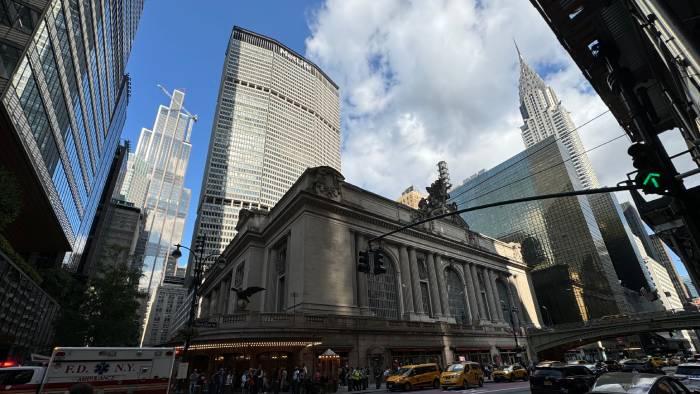
  • Grace BuildingSOM, 1972
    Known for its iconic sloped façade, echoing the curve of the plaza.
  • American Radiator BuildingHood & Foulihoux, 1924
    An early example of black-and-gold Art Deco with Gothic references.
  • Bryant Park Hotel (formerly American Radiator Building) – Repositioned for luxury hospitality.
  • Bryant Condominiums and HotelDavid Chipperfield, 2018
    Minimalist modernism with views over Bryant Park.
  • Bank of America TowerCookFox and Adamson Associates, 2004–2009
    A pioneering LEED Platinum skyscraper, celebrating sustainability.
  • Salesforce Tower (1095 Sixth Ave)Kahn & Jacobs, 1971–73; renovation by KPF, 2010
    A retrofitted 1970s tower reimagined for a new generation.

2. Madison Avenue & The Morgan Library

Where literary elegance meets modern expansion.

  • Morgan Library & Museum
    Original by McKim, Mead & White, 1906–1928; Modern addition by Renzo Piano, 2012
    A jewel box of American Renaissance design, fused with contemporary refinement.

    • Church of the Incarnation, Emlen T. Littell, 1865
    • J.P. Morgan’s Townhouse, McKim, Mead & White, 1880s

3. Park Avenue South

Residences and institutions shaped by 19th-century American classicism.

  • Historic Rowhouses and Townhouses
    Charles Follen McKim, Stanford White, James Renwick Jr.
    Notable for their Romanesque, Italianate, and Neo-Grec designs.
  • Church of the Transfiguration (“The Little Church Around the Corner”), 1849
  • The Prince George Hotel, Howard Greenley, 1904
  • Robb House at 23 Park Avenue, McKim, Mead & White, 1888-92

4. Empire State Building: The Rise of a Legend

Midtown’s vertical symbol of ambition and resilience.

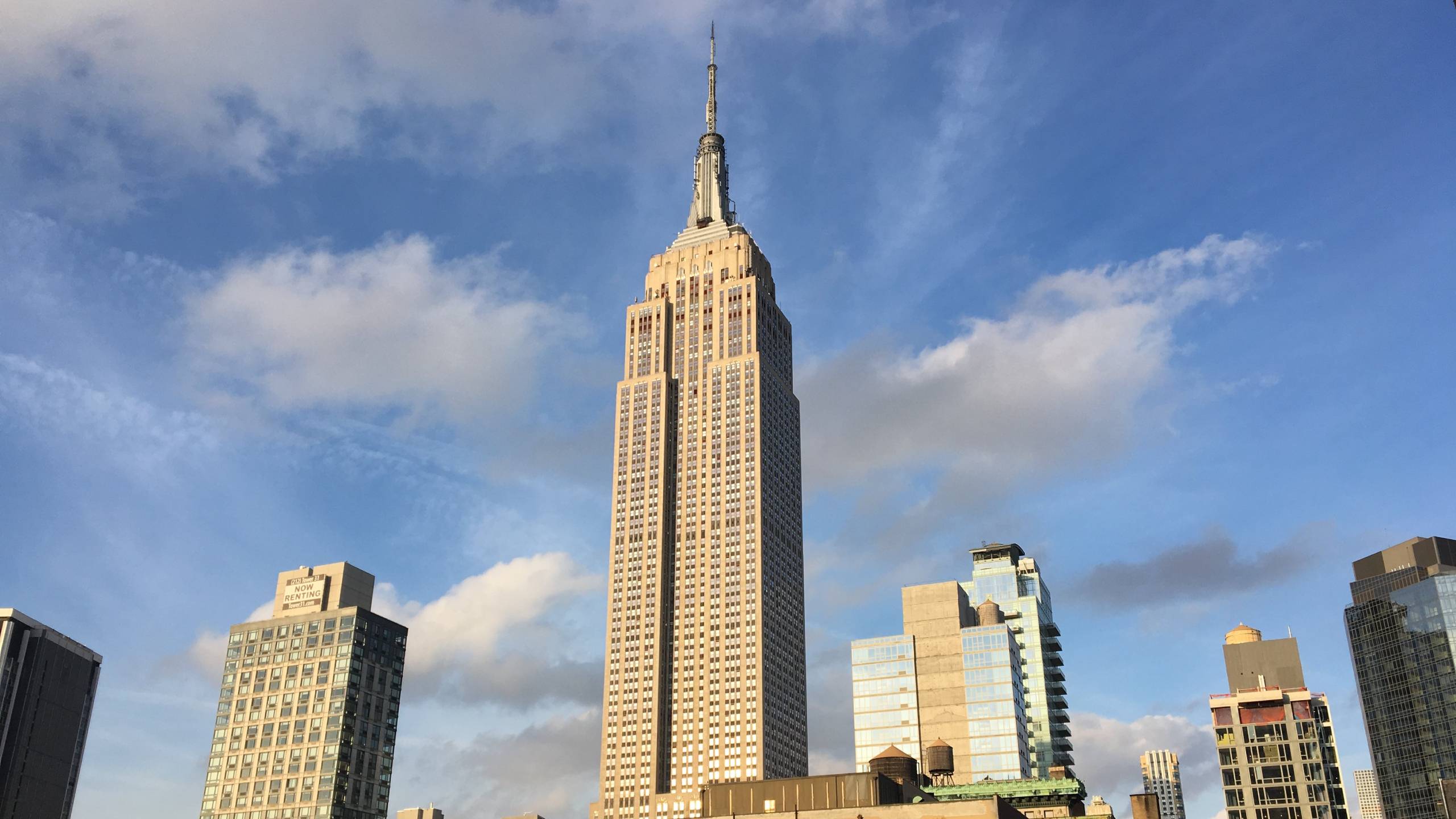
  • Empire State BuildingShreve, Lamb & Harmon, 1930–31
    The most iconic Art Deco skyscraper in the world—built in just 410 days.
  • 🆕 Nearby Points of Interest:
    • Marble Collegiate Church, Samuel A. Warner, 1854
    • B. Altman Building, Trowbridge & Livingston, 1906

5. Madison Square Park & Flatiron District

The city’s early commercial center, now a hub for adaptive reuse and design.

  • Madison Square Park1847
    A landscape of innovation, sculpture, and civic engagement.
  • Original Madison Square GardenStanford White, 1890 (demolished)
    Legendary events in a Moorish-inspired domed palace.
  • Metropolitan Life TowerNapoleon Le Brun, 1906–09
    Once the tallest building in the world, modeled after Venice’s Campanile.
  • Metropolitan Life North Building (Credit Suisse)Harvey Wiley Corbett & D. Everett Waid, 1920–30
    A Deco giant, unfinished due to the Depression.
  • New York Life BuildingCass Gilbert, 1926
    Gilded pyramid crowning an early corporate cathedral.
  • New York Merchandise MartEmery Roth & Sons, 1974
    Brutalist and bold, housing design industry showrooms.
  • Appellate Division Courthouse, James Brown Lord, 1900
  • New York Edition Hotel (Metropolitan Life Clock Tower)Adaptive reuse by Ian Schrager
  • 121 East 22nd StreetOMA, 2019
    A contemporary landmark of angular glass and minimalism.

Flatiron BuildingDaniel Burnham and Frederick P. Dinkelberg, 1902
The original “skyscraper,” defining the triangular block where Broadway and Fifth Avenue meet.

Featured Buildings

View additional buildings and sites explored on this tour

A dynamic blend of historic icons and modern skyscrapers.

  • Bryant ParkLusby Simpson, 1847–1933
    Once a potter’s field, now a beloved public square framed by monumental buildings.
  • New York Public Library (Stephen A. Schwarzman Building)Carrère & Hastings, 1911
    A Beaux-Arts masterpiece and cultural landmark.
  • Grace BuildingSOM, 1972
    Known for its iconic sloped façade, echoing the curve of the plaza.
  • American Radiator BuildingHood & Foulihoux, 1924
    An early example of black-and-gold Art Deco with Gothic references.
  • Bryant Park Hotel (formerly American Radiator Building) – Repositioned for luxury hospitality.
  • Bryant Condominiums and HotelDavid Chipperfield, 2018
    Minimalist modernism with views over Bryant Park.
  • Bank of America TowerCookFox and Adamson Associates, 2004–2009
    A pioneering LEED Platinum skyscraper, celebrating sustainability.
  • Salesforce Tower (1095 Sixth Ave)Kahn & Jacobs, 1971–73; renovation by KPF, 2010
    A retrofitted 1970s tower reimagined for a new generation.

2. Madison Avenue & The Morgan Library

Where literary elegance meets modern expansion.

  • Morgan Library & Museum
    Original by McKim, Mead & White, 1906–1928; Modern addition by Renzo Piano, 2012
    A jewel box of American Renaissance design, fused with contemporary refinement.

    • Church of the Incarnation, Emlen T. Littell, 1865
    • J.P. Morgan’s Townhouse, McKim, Mead & White, 1880s

3. Park Avenue South

Residences and institutions shaped by 19th-century American classicism.

  • Historic Rowhouses and Townhouses
    Charles Follen McKim, Stanford White, James Renwick Jr.
    Notable for their Romanesque, Italianate, and Neo-Grec designs.
  • Church of the Transfiguration (“The Little Church Around the Corner”), 1849
  • The Prince George Hotel, Howard Greenley, 1904
  • Robb House at 23 Park Avenue, McKim, Mead & White, 1888-92

4. Empire State Building: The Rise of a Legend

Midtown’s vertical symbol of ambition and resilience.

  • Empire State BuildingShreve, Lamb & Harmon, 1930–31
    The most iconic Art Deco skyscraper in the world—built in just 410 days.
  • 🆕 Nearby Points of Interest:
    • Marble Collegiate Church, Samuel A. Warner, 1854
    • B. Altman Building, Trowbridge & Livingston, 1906

5. Madison Square Park & Flatiron District

The city’s early commercial center, now a hub for adaptive reuse and design.

  • Madison Square Park1847
    A landscape of innovation, sculpture, and civic engagement.
  • Original Madison Square GardenStanford White, 1890 (demolished)
    Legendary events in a Moorish-inspired domed palace.
  • Metropolitan Life TowerNapoleon Le Brun, 1906–09
    Once the tallest building in the world, modeled after Venice’s Campanile.
  • Metropolitan Life North Building (Credit Suisse)Harvey Wiley Corbett & D. Everett Waid, 1920–30
    A Deco giant, unfinished due to the Depression.
  • New York Life BuildingCass Gilbert, 1926
    Gilded pyramid crowning an early corporate cathedral.
  • New York Merchandise MartEmery Roth & Sons, 1974
    Brutalist and bold, housing design industry showrooms.
  • Appellate Division Courthouse, James Brown Lord, 1900
  • New York Edition Hotel (Metropolitan Life Clock Tower)Adaptive reuse by Ian Schrager
  • 121 East 22nd StreetOMA, 2019
    A contemporary landmark of angular glass and minimalism.

Flatiron BuildingDaniel Burnham and Frederick P. Dinkelberg, 1902
The original “skyscraper,” defining the triangular block where Broadway and Fifth Avenue meet.

Tour Themes

Itinerary & Route

Meeting Point: New York Public Library – Stephen A. Schwarzman Building

Bryant Park & Sixth Avenue (30 mins)
We start at Bryant Park, surrounded by notable buildings like the New York Public Library and the American Radiator Building. Modern towers like the Grace Building, Bank of America Tower, and Salesforce Tower show the area’s ongoing evolution.

Madison Avenue & The Morgan Library (30 mins)
This stop includes the historic Morgan Library with its modern Renzo Piano addition, the Church of the Incarnation, and J.P. Morgan’s townhouse—highlighting architectural continuity and contrast.

Park Avenue South (30 mins)
We walk past 19th-century rowhouses and civic buildings including the Church of the Transfiguration, the Prince George Hotel, and the Robb House—showcasing classic residential architecture.

Empire State Building & Midtown (30 mins)
The Empire State Building anchors this segment, surrounded by earlier landmarks like the Marble Collegiate Church and B. Altman Building—linking Art Deco ambition with Midtown’s older roots.

Madison Square Park & Flatiron (30 mins)
Ending in the Flatiron District, we explore Madison Square Park, major towers like the Met Life and New York Life Buildings, the Flatiron Building, and new developments like OMA’s 121 East 22nd.

Ending Point: Madison Square Park

Your Guides

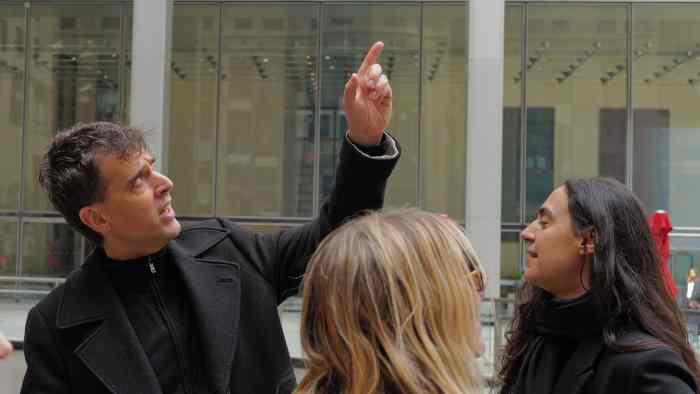
Our tours are led by architects and urban experts with deep knowledge of New York’s architecture, development, and city systems.

Each guide brings a unique perspective, combining professional experience with a passion for sharing the stories behind the city’s buildings and neighborhoods.

Tour Experience Gallery

A glimpse into the architecture, streets, and spaces explored on this tour.

Your Title Goes Here

Your content goes here. Edit or remove this text inline or in the module Content settings. You can also style every aspect of this content in the module Design settings and even apply custom CSS to this text in the module Advanced settings.

Your Title Goes Here

Your content goes here. Edit or remove this text inline or in the module Content settings. You can also style every aspect of this content in the module Design settings and even apply custom CSS to this text in the module Advanced settings.

Practical Information

Accessibility:

This tour involves moderate walking at a comfortable pace with regular stops along the route. While most of the tour takes place on public sidewalks and plazas, some areas may include uneven surfaces.

Please contact us in advance if you have specific accessibility needs, and we will do our best to accommodate you

What to Bring:

We recommend wearing comfortable walking shoes and dressing appropriately for the weather. In warmer months, consider bringing water, sunscreen, and a hat. In cooler weather, please dress in layers. A curious mind is all you need to enjoy the tour.

Weather Policy:

Tours take place rain or shine. In case of severe weather conditions that may affect safety or the quality of the experience, we will contact you in advance to reschedule or provide alternative arrangements.

Cancellation Policy:

Public tours can be canceled or rescheduled up to 24 hours in advance for a full refund.

Private tours and group programs are subject to specific cancellation terms, which will be outlined at the time of booking or proposal.

Please contact us if you have any questions regarding your reservation.

Testimonials

Frequently Asked Questions


Is this tour suitable if I don’t have an architecture background?

Yes. Our tours are designed to be engaging and accessible to all visitors, whether you are an architecture enthusiast, a professional, or simply curious about the city.

What is the difference between public and private tours?

Public tours follow scheduled departures and are shared with a small group. Private tours are exclusive to your group and can be customized in terms of schedule, route, and focus.

How much walking is involved?

This is a walking tour covering approximately 1.5 miles. A moderate level of walking is required, with regular stops along the route.

Can this tour be customized?

Yes. Private tours and group programs can be tailored to your interests, schedule, and areas of focus.

   Still have some questions?

Discover New York Through Architecture

Join a public tour or plan a private experience tailored to your interests.